
Yellow Split Pea Soup | PJ Kabos Recipe
Updated: Jul 5
Soup— Comfort Food
Serves 6
Olive Oil Used
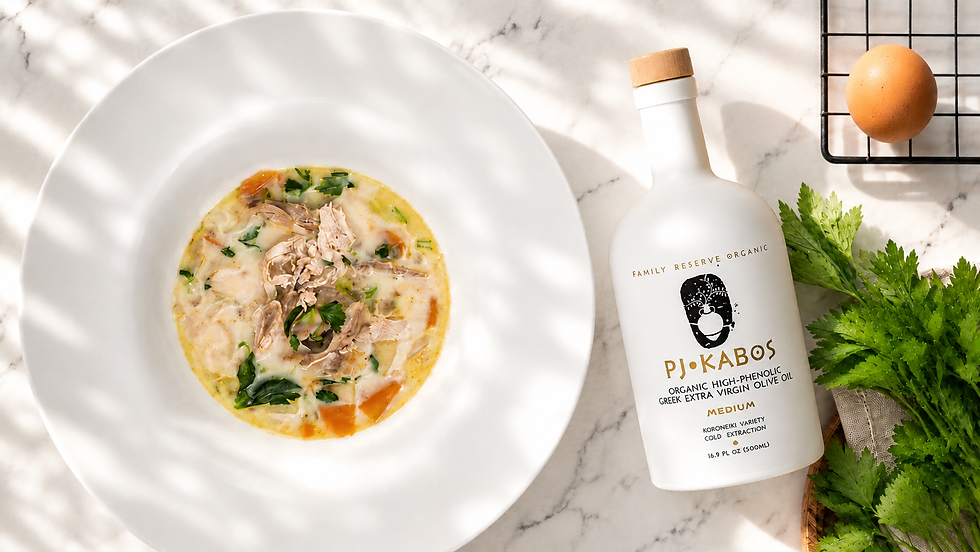
Used here:
Family Reserve — Medium (White Tin)
Yellow split pea soup is one of those deeply comforting Mediterranean dishes built from simple ingredients — split peas, onions, celery, olive oil, and time. Finished with high-phenolic extra virgin olive oil, lemon, fresh village bread and feta it becomes both nourishing and deeply satisfying.
PJ Kabos recipes are created to highlight the depth, balance, and character of high-phenolic extra virgin olive oil — bringing everyday dishes to life in a simple, natural way.
Beyond the Recipe
Learn why yellow split peas and high-phenolic olive oil make such a powerful Mediterranean pairing in our companion article, Why Yellow Split Peas and High-Phenolic Olive Oil Work So Well Together.

Yellow Split Pea Soup: Mediterranean Meal
Humble, nourishing, and deeply comforting, yellow split pea soup has long been part of Mediterranean and village cooking traditions. Made with onions, celery, olive oil, and slowly simmered split peas that naturally melt into a creamy texture, this simple soup becomes both hearty and elegant.
Finished with high-phenolic extra virgin olive oil, lemon, fresh village bread or pita, and feta, it is a dish that feels ancient, wholesome, and deeply satisfying — proof that some of the simplest ingredients create the most enduring meals.
Split Pea Soup — Watch Video
Recipe
Ingredients
1 lbs package (500 g) yellow split peas, dried
2 large onions, diced
3 tablespoons PJ Kabos Extra Virgin Olive Oil, for sautéing the onion
2 celery stalks, chopped
1 teaspoon salt
¼ teaspoon pepper
1 cup PJ Kabos Extra virgin Olive Oil, for the end (when the split peas are no longer boiling)
boiling water, as needed
For Serving
1 lemon
6 to 8 teaspoons of High-Phenolic PJ Kabos Extra Virgin Olive Oil Family Reserve Organic Robust, for drizzling during serving or 4 teaspoon PJ Kabos White or Black Extra Virgin Olive Oil Truffle Oil (optional), for drizzling during serving
celery, fresh leaves
Fresh village bread, pita bread or PJ Kabos Recipe, Tiropita Koulouriou.
pepper, optional
feta cheese, 3 to 4 bite-sized chunks, in each soup bowls
Preparation
Sift through the peas
Pour the dried split peas onto a plate and sift through them to ensure there are no stones or other foreign objects hidden among them (depending on the brand this is not always necessary. But we just like to make sure there are no hidden stones that might break a tooth!).
Soak the peas
Pour the cleaned split peas into a pot, run cold water over them and drain several times. Add cold water to cover the peas by three inches, lightly cover the pot (leave a small opening so the peas can breathe) and let the peas soak. We like to soak them for about 4 hours. After 4 hours, if you don’t wish to cook them at this time, place them in the refrigerator and cook within 24 hours of starting the soaking process. Change the water 2 or 3 times depending on how long they are soaked.
Onions
Sauté the onions. Set aside.
Cooking the peas
After soaking, empty the soaking water and fill the pot with fresh cold water.
Place the pot on the stove and turn on medium. Be on hand to remove any foam that might form just before boiling. When the split peas start to boil add the sautéed onions along with its oil. This will help to prevent the peas from overflowing the pot (another tablespoon of oil may be added if needed).
Turn the fire down one notch. Add the celery and pepper.
Boil on medium-high for 1 hour, or until the peas are tender, adding the necessary amount of boiling water, to bring the level in the pot back up to the starting point, however often needed.
When the split peas are tender and have turned into a cream (normally about 1 hour—this all depends on the split peas…and they are often different) turn the temperature down to low and continue to cook on low until you have the desired soup consistency.
Add salt, stir, and turn off the split peas.
When they have stopped boiling and cooled to a bit, add 1 cup PJ Kabos Extra Virgin Olive Oil. Gently stir in until well mixed.
For serving
Into each serving bowl add a squeeze of lemon juice and a drizzle of PJ Kabos High-Phenolic Extra Virgin Olive Oil over the top or, for added flavor (a great deal of flavor!), a light drizzle of PJ Kabos Extra Virgin Truffle Oil (black or white).
Crumble feta cheese over the soup and, if desired, fresh celery.
Serve with fresh village bread, pita bread or Tiropita Koulouriou.
Kali Orexi — Good Appetite!
Continue Reading
Discover the nutrition, culinary traditions, and natural synergy behind this classic Mediterranean pairing in Why Yellow Split Peas and High-Phenolic Olive Oil Work So Well Together.
The Most Recent Harvest (2025–26)
Please note: Phenolic levels and profiles vary with each harvest.

Extremely High-Phenolic Organic Extra Virgin Olive Oil
Phenols: 995 mg/kg (HPLC), at production
Hydroxytyrosol (& derivatives): 14+ mg/20 g (far above the EU health claim threshold)
USDA Organic
Kosher
Primary Use: Daily Phenolic Shot
Secondary Use: Finishing, Vinaigrettes
Taste Intensity: Robust +

Very High-Phenolic Organic Extra Virgin Olive Oil
Phenols: 699 mg/kg (HPLC), at production
Hydroxytyrosol (& derivatives): 10+ mg/20 g (well above the EU health claim threshold)
USDA Organic
Kosher
Primary Use: Daily Phenolic Shot, Finishing
Secondary Use: Baking, Cooking
Taste Intensity: Robust

High-Phenolic Organic Extra Virgin Olive Oil
Phenols: 400+ mg/kg (HPLC), at production
Hydroxytyrosol (& derivatives): 7+ mg/20 g (more than meets the EU health claim threshold)
USDA Organic
Kosher
Primary Use: Finishing & Cooking
Secondary Use: Daily Phenolic Shot
Taste Intensity: Medium

High-Phenolic Extra Virgin Olive Oil
Phenols: 400+ mg/kg (HPLC), at production
Hydroxytyrosol (& derivatives): 5+ mg/20 g (meets the EU health claim threshold)
No Pesticides
Kosher
Primary Use: Finishing & Cooking
Secondary Use: Daily Phenolic Shot
Taste Intensity: Medium

Extra Virgin Olive Oil
Phenols 250-300 mg/kg (HPLC), at production
Hydroxytyrosol (& derivatives): 3+ mg/20 g (below the EU health claim threshold; still an excellent EVOO)
No Pesticides
Kosher
Primary Use: Cooking, Baking
Secondary Use: Finishing
Taste Intensity: Delicate
Contents
PJ Kabos Guide to Olive Oil
Where ancient olive-growing wisdom meets modern science, your guide to choosing, tasting, and enjoying exceptional high-phenolic extra virgin olive oil. We hope it inspires you in your olive-oil journey.
How olive oil quality is defined — and why the difference matters for taste, health, and daily use.
Why extra virgin and high-phenolic olive oils shine in real-life cooking, from sautéing to roasting.
Your simple daily ritual for harnessing the powerful antioxidants in high-phenolic olive oil.
How phenolic compounds support heart, brain, metabolic, joint, and whole-body vitality across the years.
How cholesterol works — and how extra virgin olive oil supports balance and heart health.
A simple guide to the phenolic compounds in olive oil — what phenols and polyphenols are and why they contribute to olive oil’s flavor, stability, and potential health benefits.
VII. What Is a Daily Phenolic Shot of Olive Oil and What Is the EU “Health Claim” Concerning It? | PJ Kabos Guide
How phenolic content varies from oil to oil and from harvest to harvest — and how to choose an olive oil that meets the EU Health Claim.
A clear look at whether extra virgin olive oil contains heavy metals, microbes, or allergens — and how its natural composition, along with laboratory testing, helps us understand what is — and is not — present.
A clear introduction to tasting notes and flavor in extra virgin olive oil — exploring how these natural characteristics arise from the olive, and how bitterness and pungency shape the oil's character and overall tasting experience.
A thoughtful exploration of aroma and appearance in extra virgin olive oil — how scent prepares the palate, how visual cues can mislead, and how these first impressions shape the tasting experience.
Learn how to choose a good olive oil with simple, practical guidance on freshness, origin, packaging, and what truly matters in quality. A simple checklist is included.
Subscribe and stay tuned — more chapters coming soon.
Please enjoy having a look around our websites and PJ Kabos Amazon Store for more about our many high-phenolic olive oils, recipes, history, etc.
And follow along with us on Instagram for photos concerning olive oil production, our groves in Greece, articles about olive oil, family history and more.


Comments