
Greek Lemon Chicken Soup (Avgolemono) | PJ Kabos Recipe
Soup— Comfort Food
Serves 6
Olive Oil Used
Used here:
Family Reserve Organic — Medium (White Bottle)
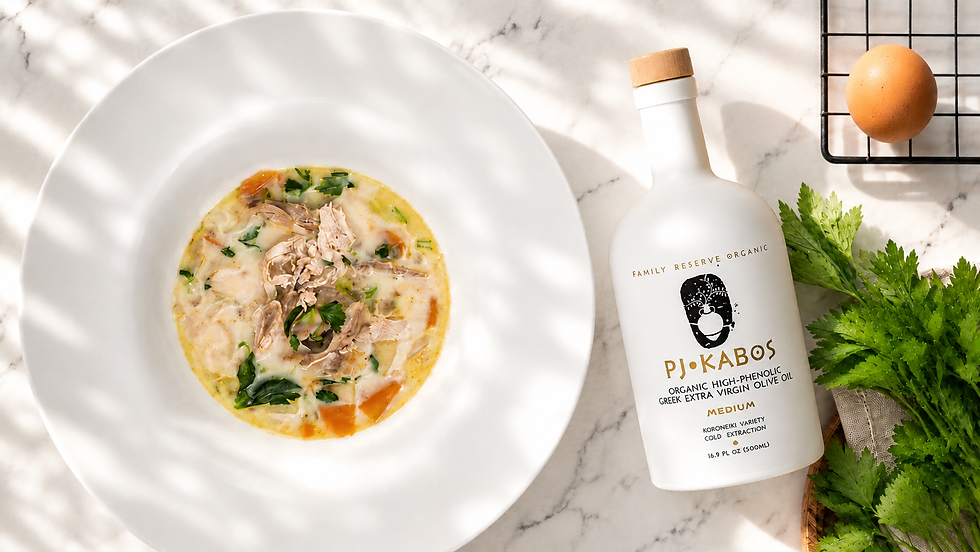
A beloved Greek classic — bright, comforting, and beautifully balanced — avgolemono soup brings together tender chicken, delicate citrus, and a silky, nourishing broth, made even more flavorful with high-phenolic olive oil.
PJ Kabos recipes are created to highlight the depth, balance, and character of high-phenolic extra virgin olive oil — bringing everyday dishes to life in a simple, natural way.
A Classic Greek Soup for Every Season
This chicken soup is perfect any time of year — refreshing and hydrating in the summer, cozy and comforting in the winter.
But where it truly shines is when someone is feeling under the weather. There’s real healing power in every bowl! And when you make it with High Phenolic Extra Virgin Olive Oil, you’re not just adding incredible flavor — you’re boosting the health benefits of this classic dish.
The avgolemono — egg/lemon — sauce strikes just the right balance between bright citrusy tang and creamy richness. Combined with the savory taste of the chicken, it creates a truly comforting and flavorful soup.
Avgolemono Chicken Soup — Watch Video
Recipe
Ingredients
For the Soup
1 small chicken (1 kilogram or less), whole, skinned
2 medium onions, chopped or sliced
3 potatoes, cut into small chunks
2 carrots, sliced
3 celery stalks, sliced thinly
½ cup celery leaves, chopped
salt, to taste
pepper, to taste
⅛ cup rice (optional)
For the Avgolemono Sauce
2 eggs, separated
2 lemons, juice
Preparation
For the vegetables
Clean and cut the potatoes; set aside in water. Chop the onions; slice the carrots, celery stalks and leaves. In a large pot, add ¼ cup PJ Kabos Extra Virgin Olive Oil. Sauté the onions and carrots.
For the chicken
Add ½ cup PJ Kabos Extra Virgin Olive Oil to the pot with the vegetables and brown the chicken on all sides. Fill the pot with water to two inches from the top. Bring to a boil. Skim any foam that might form (there most likely won’t have much since the chicken was browned). Add the vegetables, salt and pepper and boil it all together until the chicken is thoroughly cooked; approximately 2 hours. Twenty minutes before end add rice (if desired). Remove the chicken pieces. Set aside in a warm place.
To make the avgolemono sauce
In a medium bowl, separate the egg yolks from the whites. Using a whisk, mixer, or blender, beat the egg yolks until smooth. Gradually add the lemon juice, whisking continuously to ensure a smooth mixture. Once combined, add the egg whites and continue beating until fully incorporated.
Using a ladle, gradually add at least 2 cups of very hot broth from the pot of soup into the egg and lemon mixture, whisking constantly to prevent the eggs from curdling. The key is to slowly bring the egg and lemon mixture up to the same temperature as the broth in the pot (which also cooks the egg). Once the egg and lemon mixture is about the same temperature as the broth and well-blended, add it to the soup in the pot.
Gently stir or swirl the pot in one consistent direction to fully incorporate and thicken the soup. If needed, return the pot to low heat, stirring gently until the soup reaches the desired consistency.
Optional
To create a thicker sauce, you can mix 1 tablespoon of corn flour or white flour into the egg and lemon mixture after adding the lemon juice. However, this step is usually unnecessary.
Serving suggestions for the meat of the chicken
The chicken may be deboned and added to the soup or used to make a chicken salad sandwich to go along with the soup (But if the chicken is added to the soup it must be hot so as to not curdle the liquid when added). Greek Cheese & Olive Oil Savory Bun—“Tiropita Koulouriou”—makes a perfect accompaniment to this soup.
Your traditional Greek High-Phenolic Chicken Avgolemono Soup is ready to eat and fill you with energy and all sorts of good things to keep you and your family and friends healthy and strong.
Kali Orexi — Good Appetite!
The Most Recent Harvest (2025–26)
Please note: Phenolic levels and profiles vary with each harvest.

Extremely High-Phenolic Organic Extra Virgin Olive Oil
Phenols: 995 mg/kg (HPLC), at production
Hydroxytyrosol (& derivatives): 14+ mg/20 g (far above the EU health claim threshold)
USDA Organic
Kosher
Primary Use: Daily Phenolic Shot
Secondary Use: Finishing, Vinaigrettes
Taste Intensity: Robust +

Very High-Phenolic Organic Extra Virgin Olive Oil
Phenols: 699 mg/kg (HPLC), at production
Hydroxytyrosol (& derivatives): 10+ mg/20 g (well above the EU health claim threshold)
USDA Organic
Kosher
Primary Use: Daily Phenolic Shot, Finishing
Secondary Use: Baking, Cooking
Taste Intensity: Robust

High-Phenolic Organic Extra Virgin Olive Oil
Phenols: 400+ mg/kg (HPLC), at production
Hydroxytyrosol (& derivatives): 7+ mg/20 g (more than meets the EU health claim threshold)
USDA Organic
Kosher
Primary Use: Finishing & Cooking
Secondary Use: Daily Phenolic Shot
Taste Intensity: Medium

High-Phenolic Extra Virgin Olive Oil
Phenols: 400+ mg/kg (HPLC), at production
Hydroxytyrosol (& derivatives): 5+ mg/20 g (meets the EU health claim threshold)
No Pesticides
Kosher
Primary Use: Finishing & Cooking
Secondary Use: Daily Phenolic Shot
Taste Intensity: Medium

Extra Virgin Olive Oil
Phenols 250-300 mg/kg (HPLC), at production
Hydroxytyrosol (& derivatives): 3+ mg/20 g (below the EU health claim threshold; still an excellent EVOO)
No Pesticides
Kosher
Primary Use: Cooking, Baking
Secondary Use: Finishing
Taste Intensity: Delicate
Contents
PJ Kabos Guide to Olive Oil
Where ancient olive-growing wisdom meets modern science, your guide to choosing, tasting, and enjoying exceptional high-phenolic extra virgin olive oil. We hope it inspires you in your olive-oil journey.
How olive oil quality is defined — and why the difference matters for taste, health, and daily use.
Why extra virgin and high-phenolic olive oils shine in real-life cooking, from sautéing to roasting.
Your simple daily ritual for harnessing the powerful antioxidants in high-phenolic olive oil.
How phenolic compounds support heart, brain, metabolic, joint, and whole-body vitality across the years.
How cholesterol works — and how extra virgin olive oil supports balance and heart health.
A simple guide to the phenolic compounds in olive oil — what phenols and polyphenols are and why they contribute to olive oil’s flavor, stability, and potential health benefits.
VII. What Is a Daily Phenolic Shot of Olive Oil and What Is the EU “Health Claim” Concerning It? | PJ Kabos Guide
How phenolic content varies from oil to oil and from harvest to harvest — and how to choose an olive oil that meets the EU Health Claim.
A clear look at whether extra virgin olive oil contains heavy metals, microbes, or allergens — and how its natural composition, along with laboratory testing, helps us understand what is — and is not — present.
A clear introduction to tasting notes and flavor in extra virgin olive oil — exploring how these natural characteristics arise from the olive, and how bitterness and pungency shape the oil's character and overall tasting experience.
A thoughtful exploration of aroma and appearance in extra virgin olive oil — how scent prepares the palate, how visual cues can mislead, and how these first impressions shape the tasting experience.
Subscribe and stay tuned — more chapters coming soon.
Please enjoy having a look around our websites and PJ Kabos Amazon Store for more about our many high-phenolic olive oils, recipes, history, etc.
And follow along with us on Instagram for photos concerning olive oil production, our groves in Greece, articles about olive oil, family history and more.


Aloha! Love this soup! Yaya & Thea made this Avgolemomo chicken soup for me when I was a boy! Thank you, for the precise recipe & rememberance to memory my Greek heritage!