
Cooking with High-Phenolic Olive Oil—Greek Halva Cake (Oven-free) | PJ Kabos Recipe
Updated: Feb 27
Desert—Oven-free Cake
Serves: 8
PJ KABOS High-Phenolic Extra Virgin Olive Oil used:
For cooking: Family Reserve Organic – Medium (White Tin)
The Halva I Thought I Knew
When I first came to Greece as a young bride, my new mother-in-law offered me halva.
My mind immediately went to the dense, firm block of sesame sweet my own mother used to buy from the health food store in Seattle and tuck into my ski school lunch for extra energy. I loved it. I was delighted at the thought of having some again.
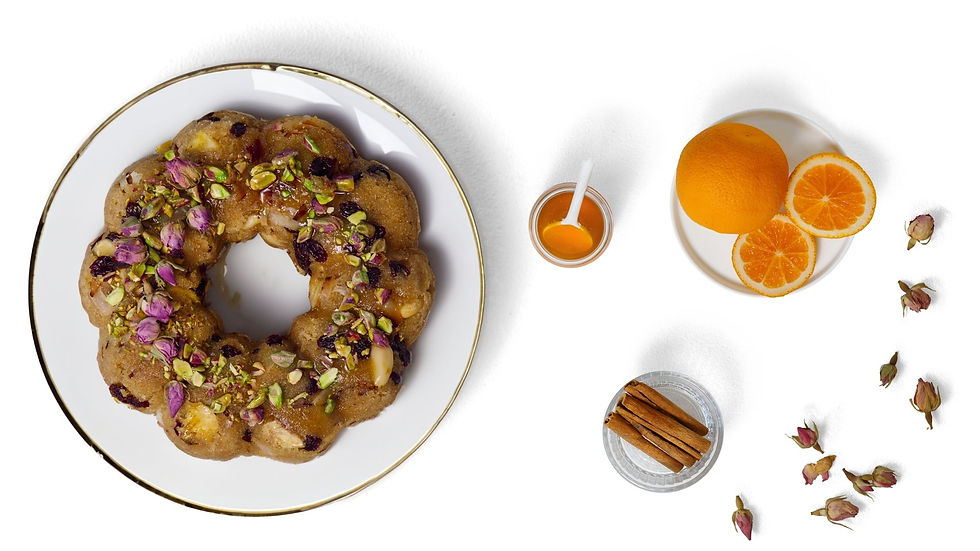
What arrived at the table, however, was something entirely different — a molded, golden ring dusted with nuts and fragrant with cinnamon and cloves.
“This is halvah?” I whispered to my new husband.
“Yes,” he smiled. “In Greece, we call it halvas.”
Not the type I knew — but I took a bite anyway. And I was enchanted.
It was soft, warm, delicately sweet, and rich with olive oil. Not what I was expecting…but that is the joy of shared culture; learning new things, tasting new traditions, and discovering that familiar words can hold entirely new meanings.
In Greece, “halva” is not just one dessert. The word describes a family of traditional sweets made from different bases — sesame, semolina, or even flour — each with its own texture and story. The sesame version, made with tahini and sugar, is the dense block many people outside Greece recognize; the one I used to enjoy on ski trips to the tall and majestic mountains surrounding Seattle.

This version, however, is halvas simigdalenios — semolina halva. The semolina is gently toasted, cooked with olive oil, and bound together with a spiced syrup made with sugar or honey. It is dairy-free, deeply traditional, and often prepared during fasting seasons, when simple ingredients are transformed into something unexpectedly beautiful.
Made properly, with good olive oil, it is not heavy. It is aromatic and quietly luxurious, a humble dessert elevated by the quality of its ingredients.
And when that olive oil is PJ Kabos high-phenolic extra virgin olive oil, the flavor deepens even further, adding structure and subtle complexity beneath the sweetness. It is a healthy, guilt-free treat, especially if a minimum amount of sugar is used.

Over the years, making this treat has become one of my favorite ways to introduce friends to Greek home cooking — a dessert that surprises and comforts, quietly showcasing the beauty of good olive oil, made even more fragrant and tasty with high-phenolic extra virgin olive oil.
Cooking with High-Phenolic Olive Oil—Greek Semolina Halva (Oven-Free) | PJ Kabos Recipe
Ingredients
For the semolina:
3 cups (500 g) coarse semolina
¼ cup raisin, stem free
¼ cup walnuts, chopped (optional)
¼ cups pine nuts (optional)
¼ cups pistachios (optional)
For the syrup:
5 cups water
1 cinnamon stick
3 cloves
1 lemon or orange rind
½ cup to 2 cups of raw sugar (according to taste) Note: 1 cup honey may be used instead.
Note: In this recipe only a ½ cup of sugar is used in preparation. Honey is added to each individual serving afterwards, according to personal taste.
For serving:
1 tsp honey per serving, optional (might be desired if only a ½ cup of sugar is used in preparation)
whole pine nuts or walnuts to decorate or personal preference in decorating (optional)
ground cloves (optional)
ground cinnamon (optional)
Preparation
For the syrup: Boil the water, cinnamon, cloves, rind and sugar in a medium pot for 5 minutes.
For the Semolina: Pour PJ KABOS Extra Virgin Olive Oil into a large frying pan. Heat but don’t burn. Slowly add the semolina and stir until the semolina is very lightly browned. Add the raisins, chopped walnuts and pine nuts. Stir and remove from fire.
Adding the syrup: Remove the cinnamon stick, cloves and rind from the syrup. Slowly add the very hot syrup to the semolina. Return the semolina to the burner and boil until cooked. When the semolina is bubbling in the pan (be careful not to get burned by the thick and popping semolina!) and it has absorbed all the moisture, it’s done. This should take only 1 or 2 minutes. Note: You might have to “dance” between leaving the mixture on the burner and removing it.
Serving: When sufficiently cooled but still hot, pour the mixture into forms; either one large form or pan, or individual forms (such as those you use in making jelly), and pat it down so that it is solid and smooth. Turn the halvah out onto plates and sprinkle with cinnamon or cloves (optional). Add honey according to taste.
Kali Orexi! – Good Appetite!
PJ Kabos High-Phenolic Extra Virgin Olive Oil: Your Trusted Oil, Straight from Our Table to Yours.

Contents
PJ Kabos Guide to Olive Oil
Where ancient olive-growing wisdom meets modern science, your guide to choosing, tasting, and enjoying exceptional extra virgin and high-phenolic olive oil. We hope it inspires you in your olive-oil journey.
How olive oil quality is defined — and why the difference matters for taste, health, and daily use.
II. Cooking with Extra Virgin Olive Oil (EVOO): Stability vs. Nutrition | PJ Kabos Guide
Why extra virgin and high-phenolic olive oils shine in real-life cooking, from sautéing to roasting.
Your simple daily ritual for harnessing the powerful antioxidants in high-phenolic olive oil.
IV. High-Phenolic EVOO for Healthy Aging | PJ Kabos Phenolic Shot | PJ Kabos Guide (coming soon)
How phenolic compounds support heart, brain, metabolic, joint, and whole-body vitality across the years.
How cholesterol works — and how extra virgin olive oil supports balance and heart health.
Subscribe and stay tuned — more chapters coming soon.

Please enjoy having a look around our websites and PJ Kabos Amazon Store for more about our many high-phenolic olive oils, recipes, history, etc...
And follow along with us on Instagram for photos concerning olive oil production, our groves in Greece, articles about olive oil, family history and more.
PJ KABOS is a top, on-line seller of High-Phenolic Extra Virgin Olive Oil. It is: "For those who want to be good to their bodies."


Comments