
Guide 14 | Is Olive Oil Safe for Sautéing?
- Oct 17, 2024
- 6 min read
Updated: Jul 30
PJ Kabos Guide to Olive Oil
This article is Part 14 of the PJ Kabos Guide to Olive Oil — where ancient olive-growing wisdom meets modern science, your guide to choosing, tasting, and enjoying exceptional extra virgin olive oil — especially high-phenolic varieties. We hope it inspires you in your olive-oil journey.
In this article, we turn our attention to a common and important cooking question: Is olive oil safe for Sautéing? With so much conflicting advice, it is worth pausing to examine the question with greater clarity.

Yes — olive oil is safe for sautéing, particularly high-phenolic extra virgin olive oil (EVOO), which excels in both flavor and health benefits when used in this cooking method. But let's look into this a bit more.
Okay, so what is sautéing?
Sautéing is a technique that involves quickly cooking food over medium heat using a small amount of fat, like oil, in a pan. While the modern practice of sautéing is closely linked to French culinary traditions, its origins likely date back to ancient times around the world — China, Egypt, Greece, Roman, etc. —evolving as cooking with pans and oils became more widespread across different cultures.
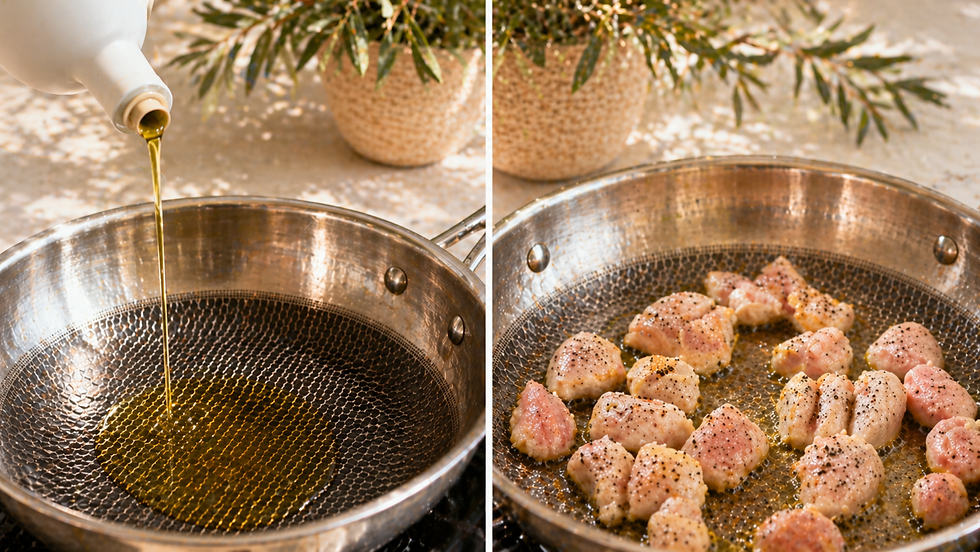
The word, sauté, comes from the French term sauter, meaning "to jump," which describes the movement of food as it cooks. When you sauté, you may use a spoon or spatula to keep the food moving, or you might "flip" the food by tilting and jerking the pan, causing the food to momentarily "jump" off the surface. Moving the food around the pan prevents it from sticking or burning while cooking evenly. The goal is to lightly brown the food on the outside while maintaining moisture inside.
Takeaway:
Sautéing is a quick, controlled method of cooking with a small amount of oil — one that has been used across cultures for centuries to bring out flavor with simplicity.
How to sauté?
As shown in the video above, to sauté, a small amount of oil is heated in a pan over medium heat. Once the oil is hot — but not smoking—food—typically cut into small, bite-sized pieces for even cooking—is added to the pan. The key to successful sautéing is keeping the food…well…jumping!
The temperature used for sautéing typically ranges from 320°F to 400°F (160°C to 205°C), which is well within the safe range for extra virgin olive oil. EVOO’s smoke point is generally between 350°F and 410°F, depending on the quality, making it ideal for sautéing.

Note: During the quick process of sautéing you may occasionally reach up to 400°F, especially if browning food, but you're constantly moving the food to prevent burning so it is not a constant 400, but rather consistently being cooled by the movement.
This method of frying is quick, usually taking just a few minutes—for example, vegetables might take around 5 minutes, while meats like chicken or shrimp may need slightly longer, around 6 to 10 minutes.
Takeaway:
At its core, sautéing is about balance — gentle heat, constant motion, and a small amount of oil working together to cook food quickly and evenly.
The bottom line:
Sautéing with EVOO is an excellent choice not only because it can handle medium heat well but also because of its nutritional advantages.
Extra virgin olive oil contains antioxidants and polyphenols, which protect the fat from breaking down or oxidizing during cooking. Stability under heat is a very important point and something to consider when thinking about using other types of oil. This means you can sauté with EVOO without worrying too much about losing its health benefits. While the oil's quality may degrade slightly after prolonged exposure to high heat, it remains far more stable and produces fewer undesirable by-products compared to other oils and fats. This makes EVOO both a safe and healthy option for cooking in this manner.
Cooking with EVOO
Some of the "minor constituents" referred to in the above quote from Science Direct and the article, Cooking with Extra-Virgin Olive Oil: A Mixture of Food Components to Prevent Oxidation and Degradation, are the small but important compounds that are present in lower concentrations compared to the main components (like fatty acids). These include Polyphenols, Tocopherols, Phytosterols, Squalene, etc.
These play a critical role in EVOO's stability under heat by protecting the oil from oxidation and degradation. Even though they are present in smaller amounts, they contribute significantly to EVOO’s ability to withstand cooking temperatures and offer health benefits.
An extremely important conclusion was drawn by researcher in this article, Domestic Sautéing with EVOO: Change in the Phenolic Profile, found in the National Library of Medicine that specifically concerns sautéing foods and phenolic compounds:
"Temperature degraded the polyphenols of EVOO during the sauté cooking process, whereas time had an effect on some individual phenols, such as hydroxytyrosol, but not on the total phenol content. The polyphenol content decreased by 40% at 120 °C and 75% at 170 °C compared to raw EVOO. Conclusions: Cooked EVOO still meets the parameters of the EU’s health claim."
This is huge. This means that even sautéed foods meet the requirements of the EU health claim for certain phenolic compounds to do much good for our bodies.
Takeaway:
Even when used for sautéing, extra virgin olive oil remains a stable and beneficial choice — retaining meaningful levels of its natural compounds and continuing to support both flavor and health.
Conclusion
Olive oil is not only safe for sautéing, but when you consider all the key factors—health benefits, taste, stability, smoke point, nutrient retention, versatility, digestibility, sustainability, quality retention, etc.—it is arguably one of the best oils you can use.
Frequently Asked Questions
IS EXTRA VIRGIN OLIVE OIL SAFE FOR SAUTÉING?
Yes — extra virgin olive oil is well-suited to sautéing. Its natural composition allows it to handle moderate cooking temperatures while maintaining stability and flavor.
WHAT TEMPERATURE IS BEST FOR SAUTÉING WITH OLIVE OIL?
Sautéing typically takes place between 320–400°F (160–205°C), which falls within the safe range for extra virgin olive oil. Keeping the heat controlled and the food moving helps prevent overheating.
DOES SAUTÉING DAMAGE THE HEALTH BENEFITS OF OLIVE OIL?
Some reduction in phenolic compounds can occur with heat, but extra virgin olive oil remains stable during sautéing and continues to provide beneficial compounds that support overall health.
IS HIGH-PHENOLIC OLIVE OIL BETTER FOR SAUTÉING?
High-phenolic extra virgin olive oil contains higher levels of natural antioxidants, which can help protect the oil during cooking and make it an excellent choice for sautéing.

Visit our Guide Library to browse all PJ Kabos Guide articles, with titles and brief descriptions to help you find the topics that interest you.
While you're here on The Fat Olive Blog, if you enjoy cooking, please check out our many
PJ Kabos Recipes (e.g., Greek Fava), or explore our Mediterranean Traditions articles (e.g., Ladera Dishes) or step into special moments of our company with PJ Kabos Journal (e.g., Nobu Matsuhisa & PJ Kabos).
You can also have a look around our websites and shop our high-phenolic extra virgin olive oils directly at PJ Kabos.com or OliveOil.com or through PJ Kabos Amazon Store. Follow along with us on Instagram for photos from our groves in Greece, olive oil production, articles, family history and more.
For Those Who Love to Dig Deeper:
Cooking with Extra-Virgin Olive Oil: A Mixture of Food Components to Prevent Oxidation and Degradation. Science Direct. Trends in Food Science & Technology.
Domestic Sautéing with EVOO: Change in the Phenolic Profile. PMC PubMed Central.
Please note: This article is for informational purposes only and should not be considered medical advice. Consult a healthcare professional for personalized guidance regarding your health and medical conditions.



Comments